Functional Age vs Chronological Age: Physiological and Physical Age Explained
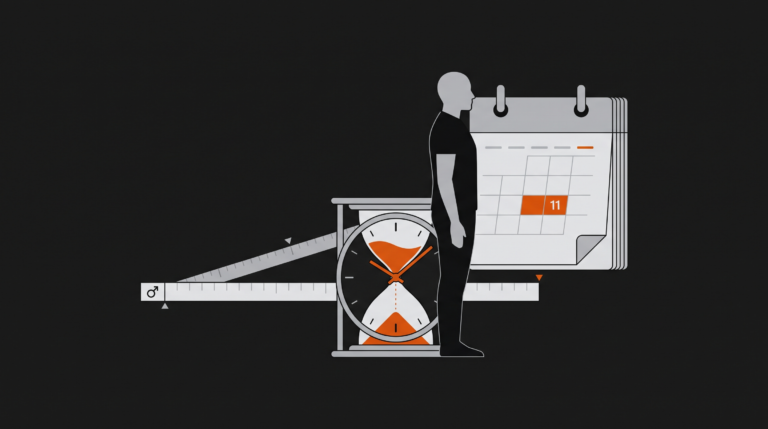
Two men turn 65 the same week. One still runs half marathons and lifts weights three times a week. The other struggles to climb a flight of stairs. Their chronological age is identical, but a doctor deciding whether either man can safely live alone or return to physical work needs a different number entirely: functional age. Calculate an exact chronological age with our chronological age calculator.
Key Takeaways
- Functional age measures physical performance capacity: strength, mobility, balance, and cardiovascular fitness, not cellular biomarkers.
- It is closely related to, but distinct from, biological age, which is measured through biomarkers like DNA methylation.
- Two people of identical chronological age can have very different functional capacity based on activity level, injury history, and chronic conditions.
- Functional age is widely used in geriatric and occupational medicine to guide independent-living and return-to-work decisions.
- It can be improved with targeted training, unlike chronological age.
How Functional Age Is Tested
- Grip strength. A simple, reliable predictor of overall physical capacity, measured with a hand dynamometer.
- Gait speed. How fast someone walks a set distance, often used as a quick screen in geriatric assessment.
- Balance testing. Standing on one leg or a narrow surface for a timed interval.
- Cardiovascular fitness (VO2 max or a proxy test). How efficiently the body uses oxygen during exertion.
- Range of motion. Flexibility and joint mobility compared to age-adjusted norms.
How It Differs From Biological Age
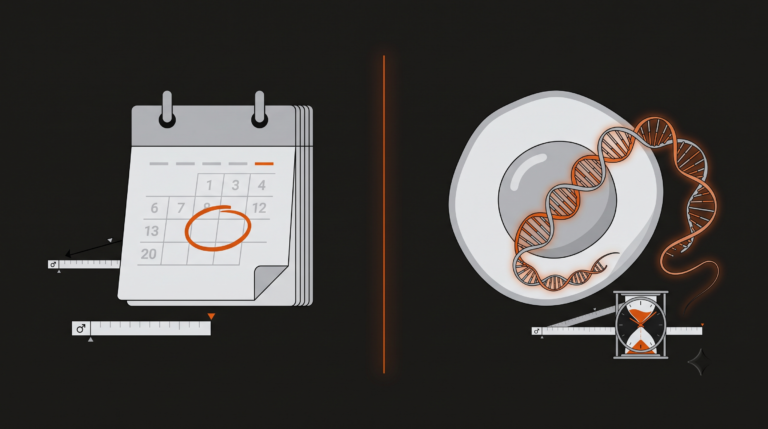
Biological age is typically estimated from cellular and molecular markers, DNA methylation patterns, telomere length, and blood chemistry, the kind of data covered in our chronological age vs. biological age guide. Functional age instead comes from performance tests. The two often move together. Someone with a younger biological age often tests with better functional capacity too, but they are measured completely differently, and a person can score well on one without the other.
Where Functional Age Gets Used
Geriatric medicine uses functional assessments to decide whether an older adult can safely live independently, far more reliably than their birth date alone. Occupational medicine uses similar physical-capacity testing to judge fitness for physically demanding jobs, and rehabilitation medicine tracks functional recovery after injury or surgery against age-adjusted norms rather than a raw calendar age.
Expert Tip
If you’re evaluating whether an older relative can live alone safely, ask their doctor about a functional assessment specifically, not just a general checkup. A gait-speed or grip-strength test gives a far more concrete answer than an informal impression.
Common Mistakes
- Assuming chronological age alone can predict someone’s physical capability.
- Skipping a functional assessment before clearing someone for physically demanding work.
- Confusing functional age with biological age, which uses lab-based biomarkers instead of performance tests.
- Treating a single test result as permanent rather than something that can improve with training.
Best Practices
- Use standardized tests, such as timed gait speed or grip strength, rather than subjective impressions.
- Re-test periodically to track change, especially after starting a new exercise program or recovering from illness.
- Combine functional testing with a medical history review before making major decisions about independence or work fitness.
- Encourage strength and balance training at any age, since both are consistently linked to better functional outcomes.
Conclusion
Chronological age treats a sedentary 65-year-old and an athletic 65-year-old identically. Functional testing does not. It is built specifically to capture the real-world gap between the two, which is exactly why clinicians reach for it when a decision, such as returning to work or living independently, depends on actual physical capability rather than years lived.
Frequently Asked Questions
Is functional age the same as biological age?
Related but different. Biological age comes from cellular biomarkers. Functional age comes from physical performance testing. See chronological age vs. biological age.
Who typically gets a functional age assessment?
Older adults being evaluated for independent living, workers in physically demanding jobs, and patients recovering from injury or surgery.
Can functional age be improved?
Yes. Strength training, cardiovascular exercise, and balance work are consistently linked to better functional test results, independent of chronological age.
What is grip strength used to predict?
It’s a simple proxy for overall muscular strength and has been linked in research to broader health and mobility outcomes.
Does functional age apply to younger adults?
Yes, though it is most commonly discussed in geriatric and occupational medicine, where the gap between chronological and functional age has the most practical consequences.
How is functional age different from a general physical exam?
A general exam checks overall health. Functional testing specifically measures physical performance capacity using standardized, repeatable tests.
Can a young person have an older functional age?
Yes. Injury, chronic illness, or a sedentary lifestyle can lower functional capacity at any chronological age.
Is there a single number for functional age?
Not usually. Results are typically reported per test, such as gait speed or grip strength, rather than combined into one overall score.
References
- Functional status assessment in older adults: Overview of physical performance measures used in geriatric assessment, via NIH / PMC.