Chronological Age vs. Biological Age: Key Differences Explained
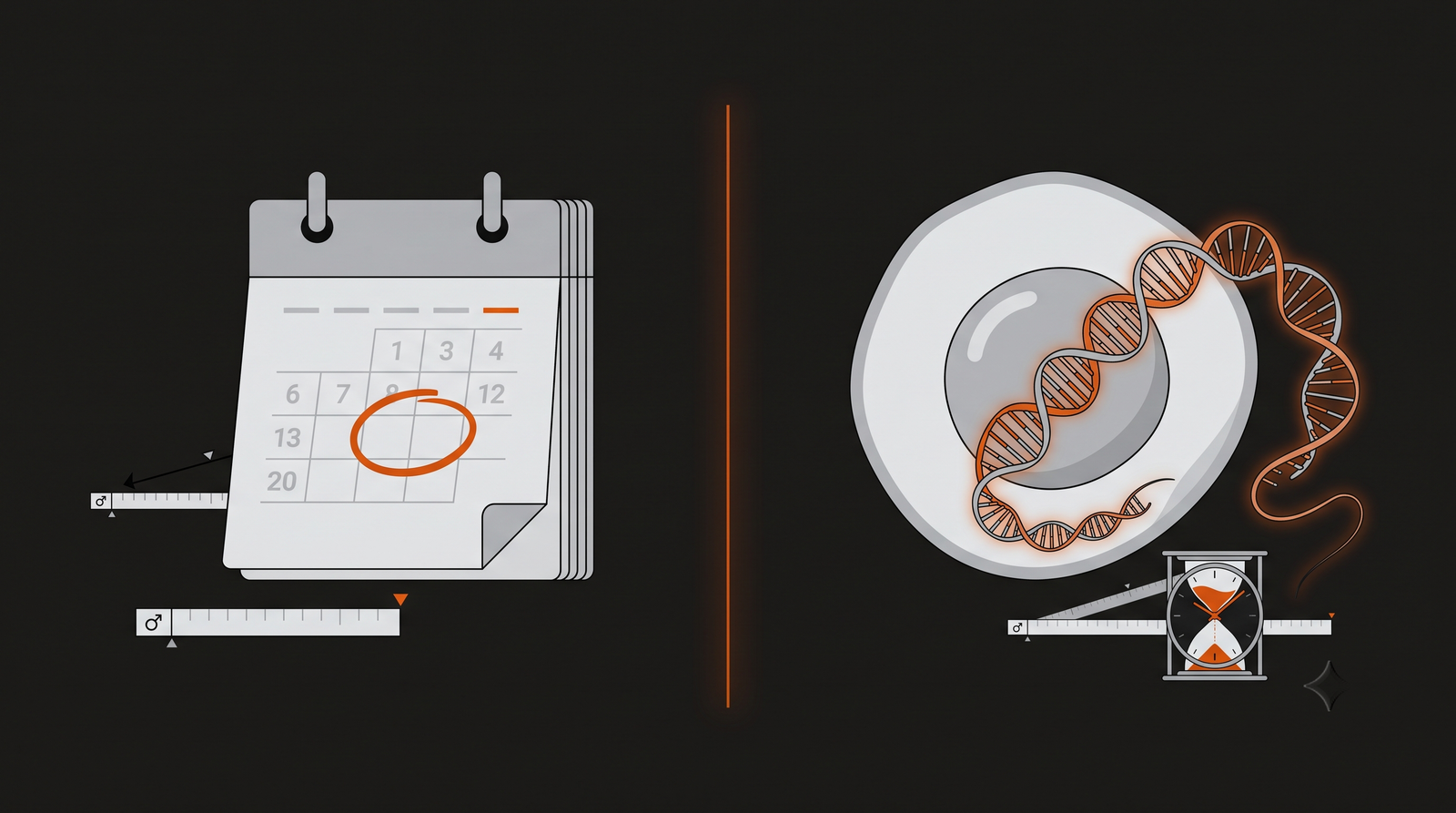
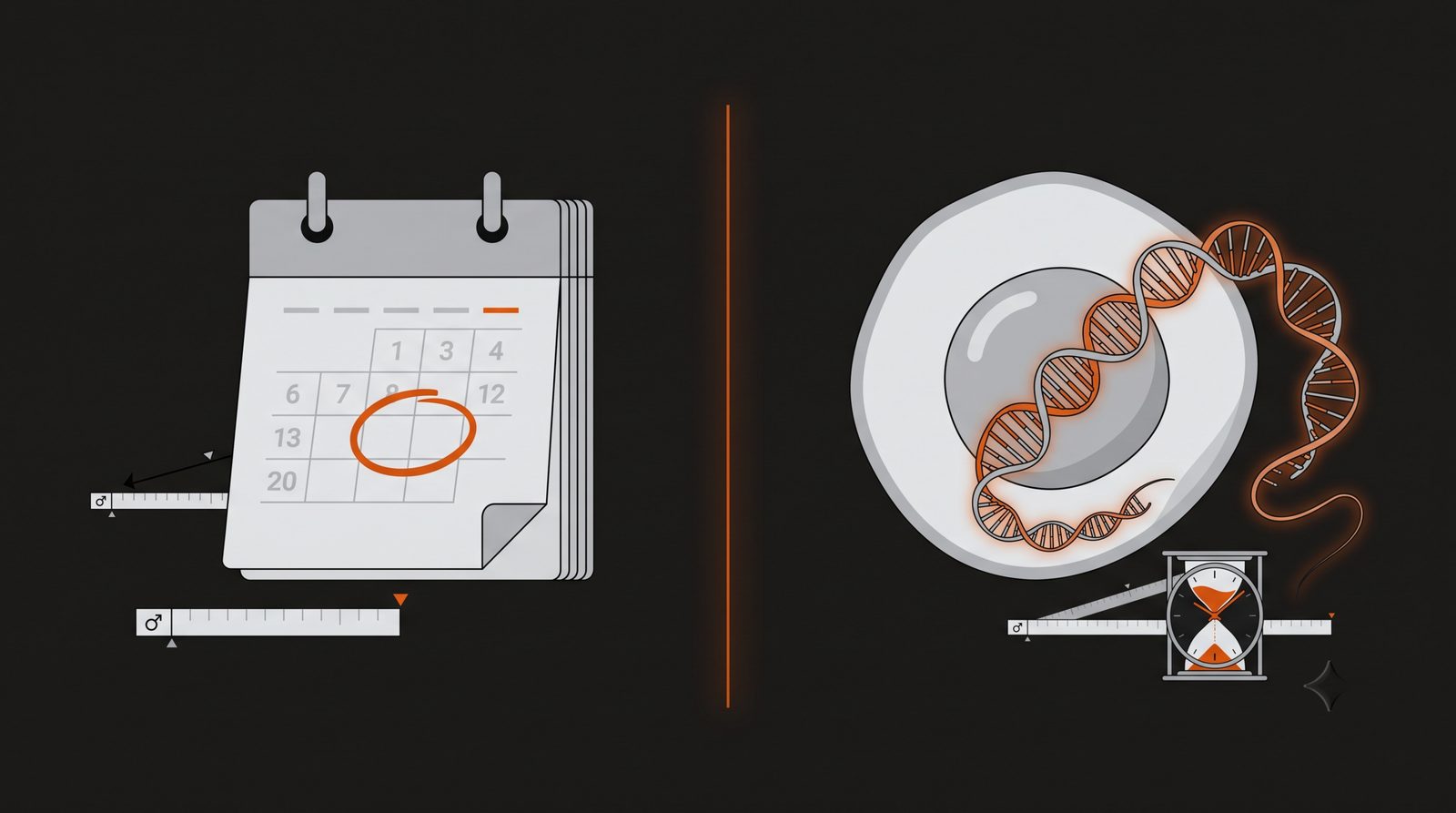
Chronological age is the number of years you’ve been alive, counted from your birth date. Biological age is how old your body actually functions, based on cellular health, organ function, and biomarkers like DNA methylation. The two numbers can match, or they can be years apart. A 50-year-old with a healthy lifestyle can have the biological age of a 40-year-old. A sedentary 50-year-old with poor health habits can have the biological age of a 60-year-old. Chronological age never changes speed. Biological age can speed up, slow down, or even reverse.
Key Takeaways
- Chronological age is fixed. It’s the time elapsed since birth, and it increases at the same rate for everyone.
- Biological age is flexible. It reflects how your cells, tissues, and organs are actually aging, and it varies from person to person.
- Genetics account for roughly 15% to 25% of aging, according to Mayo Clinic research. Harvard geneticist Dr. David Sinclair puts the genetic contribution closer to 50%. Either way, lifestyle plays a major role.
- Scientists measure biological age using biomarkers: DNA methylation (epigenetic clocks), telomere length, blood markers, and organ function tests.
- A small clinical trial found that an 8-week diet and lifestyle program lowered participants’ epigenetic age by an average of 3.23 years compared to a control group.
- Chronological age still runs most legal, medical, and administrative systems: voting, retirement, insurance pricing, and school enrollment all depend on it, not biological age.
What Is Chronological Age?
Chronological age is the simplest way to measure age. It’s the exact time that has passed between your date of birth and today (or any other reference date). You calculate it the same way every time: current date minus birth date.
This number never lies and never changes speed. Everyone born on the same day has the same chronological age, no matter how healthy or unhealthy they are. It’s the number on your driver’s license, your passport, and your birth certificate.
We covered exactly how this number is calculated, including the edge cases that trip people up, in our guide on what is chronological age.
Chronological age is objective and easy to verify. That’s exactly why it became the default standard for legal systems, schools, and healthcare scheduling. But it has one major limitation: it tells you nothing about how well a person’s body is actually functioning.
What Is Biological Age?
Biological age measures how old your body acts, not how long you’ve been alive. Cleveland Clinic defines it as an accumulation of cellular damage that builds up over time. Mayo Clinic Press describes it as a number that “captures how a person is aging, according to many different factors and biomarkers.”
Two people born on the same day can have very different biological ages. One might have the cellular health of someone 10 years younger. The other might have the cellular health of someone 10 years older. Researchers call this difference the “age gap”, the space between your biological age and your chronological age.
Biological age is estimated using biomarkers, which are measurable signs of how your body is functioning at a cellular level. Common biomarkers include:
- DNA methylation patterns (used in “epigenetic clocks” like the Horvath clock, PhenoAge, and GrimAge)
- Telomere length (the protective caps on the ends of chromosomes, which shorten with age)
- Blood-based markers (inflammation levels, blood sugar, cholesterol, kidney and liver function)
- Physical performance measures (grip strength, walking speed, lung capacity)
There’s no single, universally agreed-upon method for calculating biological age. Different tools and clocks can produce slightly different numbers for the same person. Researchers are still actively debating which biomarkers and statistical models are most valid, according to a 2023 methodological analysis of cross-sectional biological age predictors.
How Are They Different?
The core difference comes down to one idea: time versus function.
Chronological age measures time. It moves forward at a fixed, universal rate, one year for every calendar year, with no exceptions.
Biological age measures function. It reflects the actual physical state of your cells, tissues, and organs, and it can move faster or slower than the calendar depending on your genetics, lifestyle, and environment.
Comparison Table
| Factor | Chronological Age | Biological Age |
|---|---|---|
| What it measures | Time since birth | Cellular and physiological health |
| How it’s calculated | Current date minus date of birth | Biomarkers (DNA methylation, telomeres, blood tests) |
| Rate of change | Fixed: always one year per year | Variable: can speed up, slow down, or reverse |
| Same for everyone born the same day? | Yes | No |
| Can it be changed? | No | Yes, through lifestyle and health interventions |
| Where it’s used | Legal, medical scheduling, education, insurance | Longevity research, personalized health tracking, risk prediction |
| Standardization | Universally standardized | No single agreed-upon method |
Key Differences Summary
- Chronological age is fixed; biological age is modifiable.
- Chronological age is calculated by subtraction; biological age is estimated from biomarkers.
- Chronological age is used for legal and administrative decisions; biological age is used for health risk assessment.
- Chronological age has one accepted formula; biological age has multiple competing models.
Pros and Cons: Chronological Age vs. Biological Age
| Chronological Age | Biological Age | |
|---|---|---|
| Pros | Simple to calculate. Universally standardized. Impossible to dispute or fake. Required for legal and administrative systems. | Reflects actual health status. Predicts disease risk and mortality better than years alone. Can motivate healthier habits since it responds to lifestyle change. |
| Cons | Tells you nothing about actual health. Treats everyone born the same year identically, ignoring real differences in health. | No single standardized test. Different clocks can give different results for the same person. Consumer tests are not diagnostic and can be marketed with exaggerated claims. |
Neither measurement replaces the other. Chronological age is the number every system depends on. Biological age is the number worth watching if your goal is a longer, healthier life.
Examples
Chronological age example: If you were born on June 10, 1990, your chronological age on June 10, 2026, is exactly 36 years, 0 months, 0 days. This number is identical for every person born on that same date, regardless of health status.
Biological age example: Two 50-year-old men take the same epigenetic age test. One, who exercises regularly, eats a whole-food diet, sleeps 7–8 hours a night, and doesn’t smoke, tests with a biological age of 43. The other, who is sedentary, has chronic stress, and smokes, tests with a biological age of 58. Both men are chronologically 50. Their biological ages differ by 15 years.
Organ-level example: Research published via the National Institutes of Health found that the biological age of the human heart is often significantly younger than a person’s chronological age: one study of donor heart and blood tissue found the heart’s non-mitotic biological age (measured through DNA methylation) tested roughly 10 to 12 years “younger” than the donor’s actual chronological age. This shows that biological age isn’t just one number for your whole body: different organs can age at different rates.
Why Biological Age Matters
Chronological age treats everyone born in the same year identically. Biological age doesn’t. That distinction matters because biological age is a better predictor of actual health outcomes.
Studies show that biological age, measured through epigenetic clocks, helps predict:
- Risk of chronic disease (heart disease, diabetes, certain cancers)
- Cognitive decline and dementia risk
- Functional limitations in daily life
- All-cause mortality risk
According to an NIA-funded study published in the Proceedings of the National Academy of Sciences, biological age estimates can meaningfully predict health outcomes in older adults, though the same research found that socioeconomic status, mental health, and health behaviors are often just as strong, or stronger, predictors as biological age markers alone.
In other words: biological age is a useful signal, not a crystal ball. It works best alongside, not instead of, a full picture of a person’s life circumstances and health history.
This is also why biological age is gaining traction in preventive medicine. Instead of waiting for a disease to show up on a chronological timeline (screenings at 45, 50, 65), doctors and researchers increasingly want a number that reflects a patient’s actual physiological risk right now. Two patients who are both chronologically 55 might need very different screening schedules if one has a biological age of 48 and the other has a biological age of 63. Biological age, in that sense, is less about predicting a birthday and more about predicting a health trajectory.
Factors That Affect Biological Age
Biological age isn’t random. Research has identified specific factors that speed it up or slow it down.
Genetics
Genetics play a real role, but researchers disagree on exactly how much. Mayo Clinic Press states that genetic factors account for roughly 15% to 25% of aging. Harvard Medical School geneticist Dr. David Sinclair estimates the genetic contribution at closer to 50%. Either way, a substantial share of aging is within your control.
Lifestyle Habits
A 2024 review published in the Journal of Aging Research & Lifestyle (JAR Life) found consistent links between lifestyle factors and biological age markers, including:
- Diet: Diets high in whole foods and low in ultra-processed foods are linked to slower biological aging.
- Physical activity: Regular exercise is one of the most consistently supported factors for slowing biological age.
- Smoking and alcohol use: Both are linked to faster biological aging across multiple studies.
- Sleep quality: Poor or insufficient sleep is associated with accelerated aging biomarkers.
Psychological and Social Factors
A study of older adults in China found that psychological factors like loneliness and general unhappiness added up to 1.65 years to a person’s biological age, a bigger effect than sex, marital status, or smoking status in that dataset. Harvard Health also notes that loneliness and social isolation carry health risks comparable to smoking.
Environmental Exposures
Chronic stress, exposure to pollution, and even excessive noise and bright light at night have been linked to accelerated biological aging, according to Harvard Health research.
“There’s a big difference between your birthdays and your biological age, and only the latter can be changed.” Dr. David Sinclair, Harvard Medical School
Can Biological Age Change?
Yes. This is the single biggest practical difference between the two types of age. Chronological age cannot be changed. Biological age can move in either direction.
A randomized controlled pilot trial published in Aging (2021) tested this directly. Researchers put 43 healthy men, ages 50 to 72, through an 8-week program that included diet changes, sleep guidance, exercise, relaxation practices, and targeted supplementation. Using the Horvath DNA methylation clock, the treatment group’s biological age dropped by an average of 3.23 years compared to the control group, which received no intervention.
Larger population studies back this up. Consistent, evidence-based habits, not extreme biohacking protocols, are linked to slower or reversed biological aging:
- Regular moderate exercise
- A diet rich in whole foods, fiber, and plant-based nutrients
- Consistent, adequate sleep (7–9 hours for most adults)
- Stress management and strong social connections
- Avoiding smoking and limiting alcohol
It’s worth being cautious here. Most biological age reversal studies are small, short-term, and not yet replicated at scale. Bigger claims from commercial biological age testing companies (like reversing aging by a decade) go well beyond what current peer-reviewed research supports.
How Chronological Age Is Used
Even though biological age is the better health predictor, chronological age is still what runs most real-world systems. Here’s where it matters most.
Medical Applications
Doctors use chronological age to schedule vaccines, cancer screenings, and standard checkups. Pediatric growth charts and drug dosing are built around chronological age ranges, not biological age.
Legal Applications
Voting age, drinking age, driving eligibility, and the age of majority are all defined by chronological age in every jurisdiction. A bioethics discussion published by Harvard Medical School’s Center for Bioethics explored whether legal age should someday be based on biological age instead, but for now, no legal system has made that shift.
Education Applications
School enrollment cutoffs, grade placement, and standardized testing all rely on a student’s exact chronological age on a specific reference date, not their developmental or biological age.
Retirement Applications
Retirement eligibility, Social Security benefits, and Medicare enrollment (age 65 in the U.S.) are all set using chronological age, regardless of an individual’s actual health status.
Insurance Uses
Life insurance and health insurance premiums are priced primarily using chronological age, along with health history. Insurers use rules like “age nearest birthday” or “age last birthday” to set exact premium brackets, again, based on the calendar, not cellular health. Two applicants with identical biological health markers can be quoted different premiums simply because one applied a few weeks before a birthday and the other applied a few weeks after. Some insurers do factor in health screenings and biomarker data as underwriting inputs, but chronological age remains the primary variable used to set the base rate table across the entire industry.
Common Misconceptions
- “Biological age is exact.” It isn’t. Different tests and clocks can produce different results for the same person, since there’s no single agreed-upon method.
- “A high biological age means poor health right now.” Not necessarily: it’s a risk indicator, not a diagnosis.
- “You can’t influence biological age much.” Research shows lifestyle factors have a meaningful, measurable effect.
- “Chronological age doesn’t matter if you’re biologically younger.” It still governs legal rights, insurance pricing, and medical scheduling, regardless of your biological age.
- “Biological age testing is medically necessary.” Most consumer biological age tests are wellness tools, not diagnostic medical tests.
Frequently Asked Questions
What is the main difference between chronological age and biological age?
Chronological age is the number of years since birth. Biological age is how old your body functions at a cellular level, based on biomarkers like DNA methylation and telomere length.
Can my biological age be younger than my chronological age?
Yes. People with healthy lifestyles, regular exercise, balanced diets, good sleep, low stress, often test with a biological age younger than their actual age.
How is biological age measured?
Scientists use biomarkers such as DNA methylation (epigenetic clocks), telomere length, blood-based markers, and physical performance tests. There’s no single universal method.
Is there a reliable chronological age calculator?
Yes. You can calculate your exact chronological age in years, months, and days using our free chronological age calculator tool.
Can lifestyle changes lower my biological age?
Research suggests yes. A small clinical trial found an 8-week diet and lifestyle program lowered participants’ epigenetic age by an average of 3.23 years compared to a control group.
Do genetics determine biological age?
Genetics play a role, but researchers estimate they account for anywhere from 15% to 50% of aging, depending on the study. The rest comes down to lifestyle and environment.
Why do doctors still use chronological age if biological age is more accurate for health?
Chronological age is universally standardized, easy to verify, and required for medical scheduling, legal rights, and insurance, biological age currently isn’t standardized enough to replace it in those systems.
Are biological age tests medically approved?
Most consumer biological age tests are wellness and research tools, not FDA-approved diagnostic tests. Talk to a doctor before making health decisions based on results.
Does every organ in your body age at the same biological rate?
No. Research shows organs like the heart can test biologically younger or older than a person’s overall chronological age, depending on genetics and lifestyle factors specific to that organ.
Is biological age the same as “real age” marketed by wellness companies?
It’s related, but be cautious of marketing claims. Peer-reviewed research supports modest, gradual changes in biological age, not dramatic reversals some commercial products advertise.
Conclusion
Chronological age and biological age answer two different questions. One tells you how long you’ve been alive. The other tells you how well your body is holding up during that time.
Chronological age will always be the simpler, more standardized number, the one on your ID and the one insurers and governments rely on. Biological age is messier and less standardized, but it’s a far better window into your actual health and longevity odds.
You can’t change how many birthdays you’ve had. But the research is clear: through diet, exercise, sleep, stress management, and avoiding harmful habits, you have real influence over your biological age. That’s the number worth paying attention to if your goal is a longer, healthier life, not just a longer one.
Understanding your exact chronological age is still the starting point for any of this. If you haven’t already, work out your precise age in years, months, and days using our guide on how to calculate chronological age. It’s the baseline every biological age comparison starts from.